Real-time fleet visibility that keeps logistics operations moving efficiently across desktop and mobile platforms.
Real-time fleet visibility that keeps logistics operations moving efficiently across desktop and mobile platforms.
Real-time fleet visibility that keeps logistics operations moving efficiently across desktop and mobile platforms.
Grofleet Digital is a live logistics operations platform designed to help drivers, operators, and managers track, manage, and move loads more efficiently. During my two-month internship, I worked on designing both the mobile and desktop experiences, focusing on clarity, usability, and operational visibility across devices.
The primary goal was to reduce manual effort, confusion, and cognitive load for users working in fast-paced logistics environments.
Grofleet Digital is a live logistics operations platform designed to help drivers, operators, and managers track, manage, and move loads more efficiently. During my two-month internship, I worked on designing both the mobile and desktop experiences, focusing on clarity, usability, and operational visibility across devices.
The primary goal was to reduce manual effort, confusion, and cognitive load for users working in fast-paced logistics environments.
Grofleet Digital is a live logistics operations platform designed to help drivers, operators, and managers track, manage, and move loads more efficiently. During my two-month internship, I worked on designing both the mobile and desktop experiences, focusing on clarity, usability, and operational visibility across devices.
The primary goal was to reduce manual effort, confusion, and cognitive load for users working in fast-paced logistics environments.
Role
Role
Designer
Designer
Year
Year
2025
2025
Timeline
Timeline
2 months
2 months

Background & problem
Background & problem
Background & problem
Logistics operations often rely on fragmented tools, manual tracking, and unclear workflows. Drivers and operations teams struggle with visibility, while managers need quick insights without navigating complex systems.
The challenge was to design a system that:
Is easy to understand for all user roles
Works seamlessly on mobile and desktop
Simplifies critical actions like load posting, tracking, and documentation
Supports operational decisions without overwhelming user
Logistics operations often rely on fragmented tools, manual tracking, and unclear workflows. Drivers and operations teams struggle with visibility, while managers need quick insights without navigating complex systems.
The challenge was to design a system that:
Is easy to understand for all user roles
Works seamlessly on mobile and desktop
Simplifies critical actions like load posting, tracking, and documentation
Supports operational decisions without overwhelming user
Logistics operations often rely on fragmented tools, manual tracking, and unclear workflows. Drivers and operations teams struggle with visibility, while managers need quick insights without navigating complex systems.
The challenge was to design a system that:
Is easy to understand for all user roles
Works seamlessly on mobile and desktop
Simplifies critical actions like load posting, tracking, and documentation
Supports operational decisions without overwhelming user
Users
Users
Users
The platform serves multiple stakeholders:
Drivers managing loads on the go
Operators coordinating logistics activities
Managers monitoring operations and performance
Each user had different priorities, but the common need was speed, clarity, and confidence while using the product.
The platform serves multiple stakeholders:
Drivers managing loads on the go
Operators coordinating logistics activities
Managers monitoring operations and performance
Each user had different priorities, but the common need was speed, clarity, and confidence while using the product.
The platform serves multiple stakeholders:
Drivers managing loads on the go
Operators coordinating logistics activities
Managers monitoring operations and performance
Each user had different priorities, but the common need was speed, clarity, and confidence while using the product.
Mobile Experience
Mobile Experience
Mobile Experience
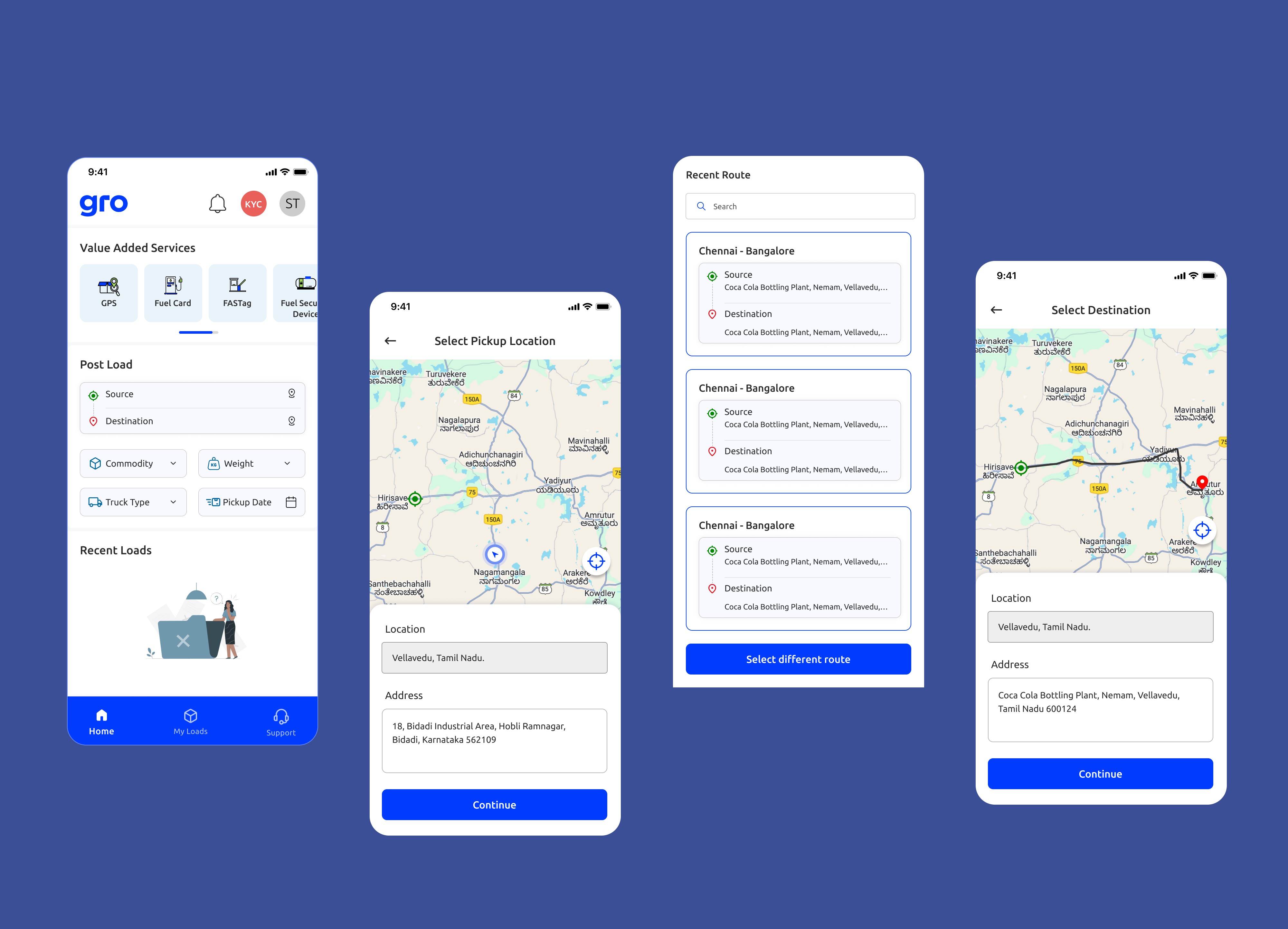
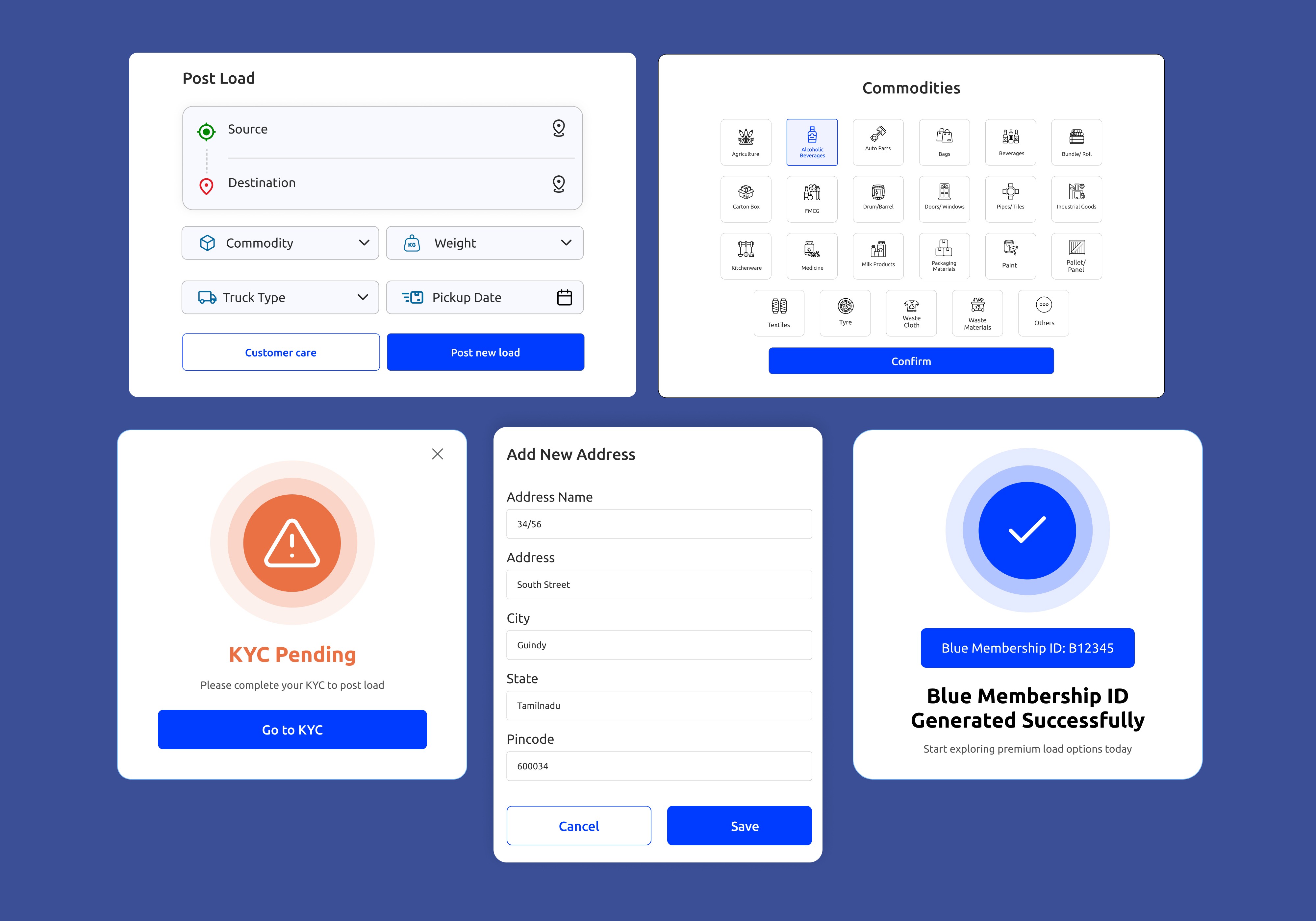
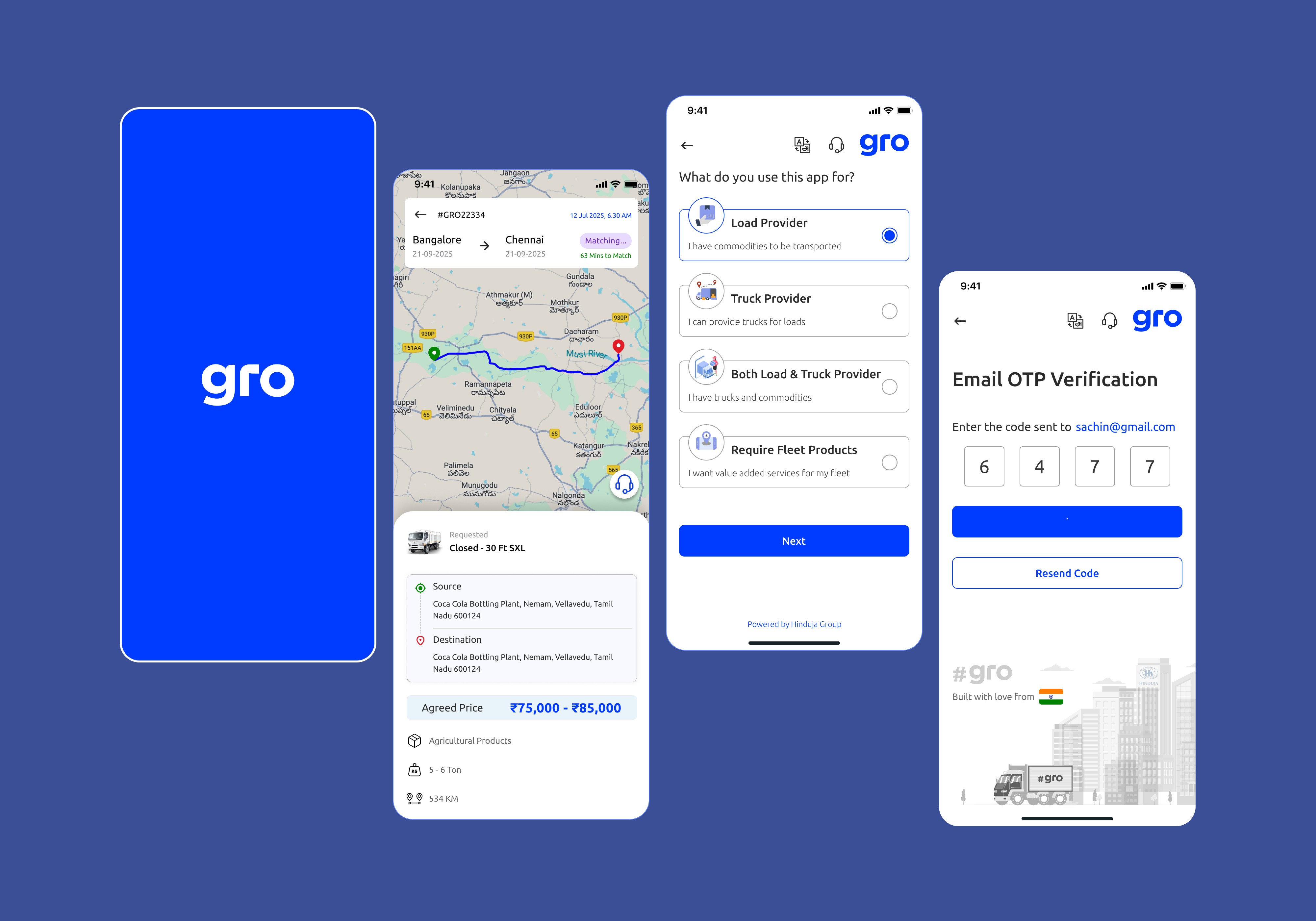
The mobile version was designed first, keeping drivers and on-ground operators in mind.
Key focus areas:
Quick access to active loads
Clear load status and updates
Easy document handling
Simple navigation for high-stress environments
The interface was intentionally minimal, allowing users to understand what needs attention at a glance.
The mobile version was designed first, keeping drivers and on-ground operators in mind.
Key focus areas:
Quick access to active loads
Clear load status and updates
Easy document handling
Simple navigation for high-stress environments
The interface was intentionally minimal, allowing users to understand what needs attention at a glance.
The mobile version was designed first, keeping drivers and on-ground operators in mind.
Key focus areas:
Quick access to active loads
Clear load status and updates
Easy document handling
Simple navigation for high-stress environments
The interface was intentionally minimal, allowing users to understand what needs attention at a glance.
Desktop Experience
Desktop Experience
Desktop Experience
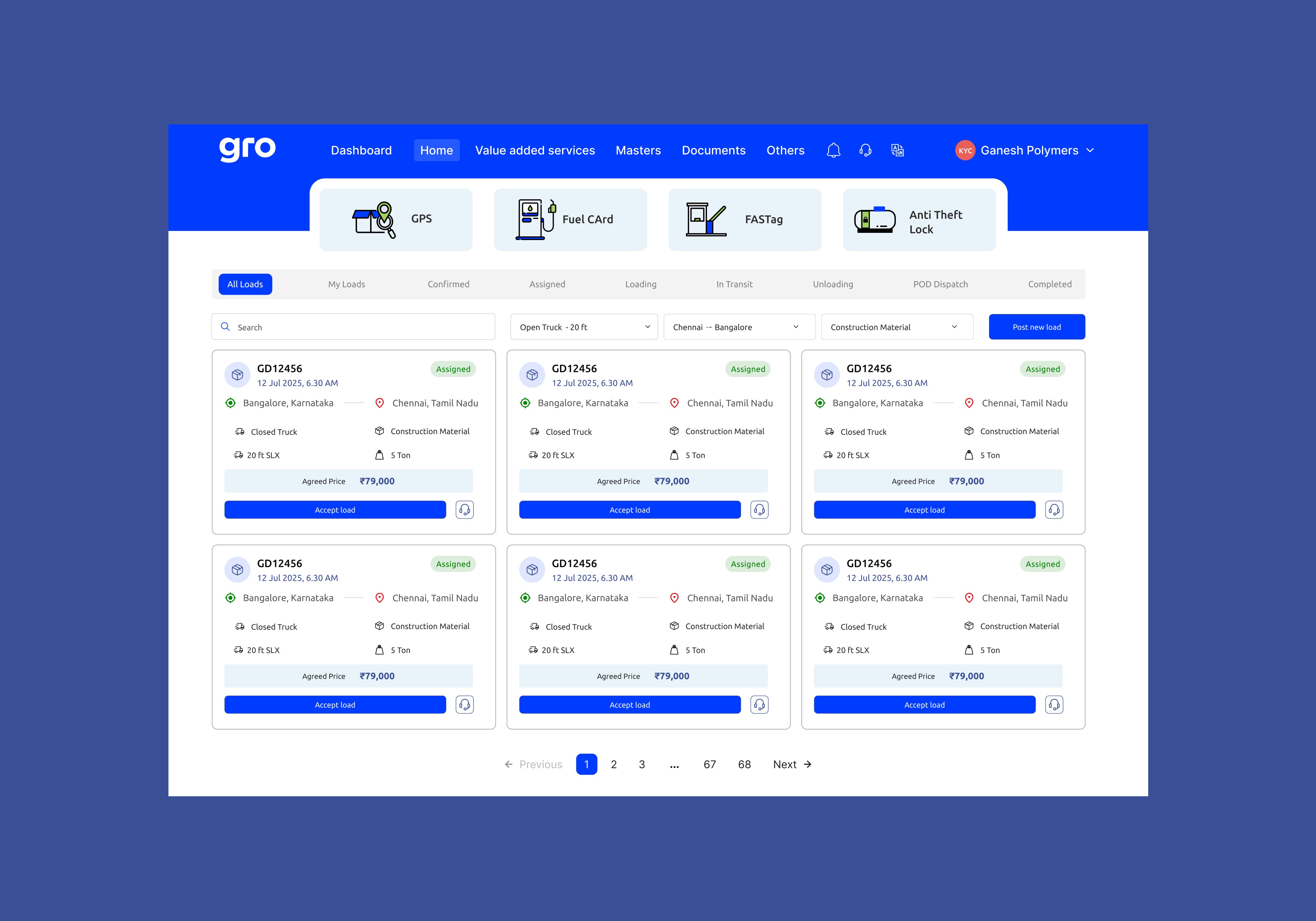
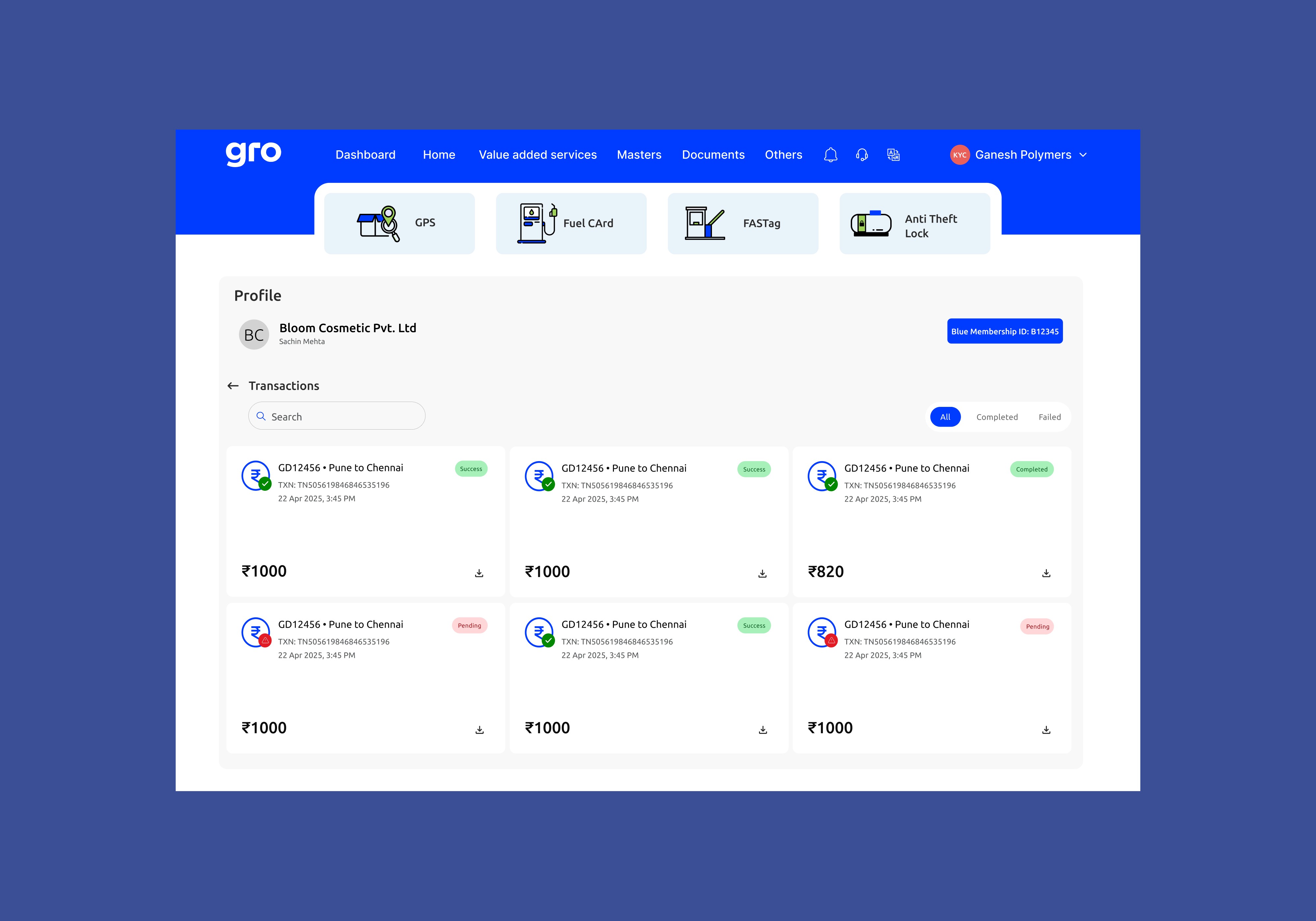
After completing the mobile design, I transitioned to the desktop experience, tailored for managers and operations teams.
Key highlights:
Dashboard-driven views for better visibility
Structured information hierarchy
Load management, value-added services, and documentation in one place
Consistent UI patterns aligned with the mobile experience
The desktop platform enabled users to monitor operations more efficiently while maintaining design consistency.
After completing the mobile design, I transitioned to the desktop experience, tailored for managers and operations teams.
Key highlights:
Dashboard-driven views for better visibility
Structured information hierarchy
Load management, value-added services, and documentation in one place
Consistent UI patterns aligned with the mobile experience
The desktop platform enabled users to monitor operations more efficiently while maintaining design consistency.
After completing the mobile design, I transitioned to the desktop experience, tailored for managers and operations teams.
Key highlights:
Dashboard-driven views for better visibility
Structured information hierarchy
Load management, value-added services, and documentation in one place
Consistent UI patterns aligned with the mobile experience
The desktop platform enabled users to monitor operations more efficiently while maintaining design consistency.

Style guide
Style guide
Style guide
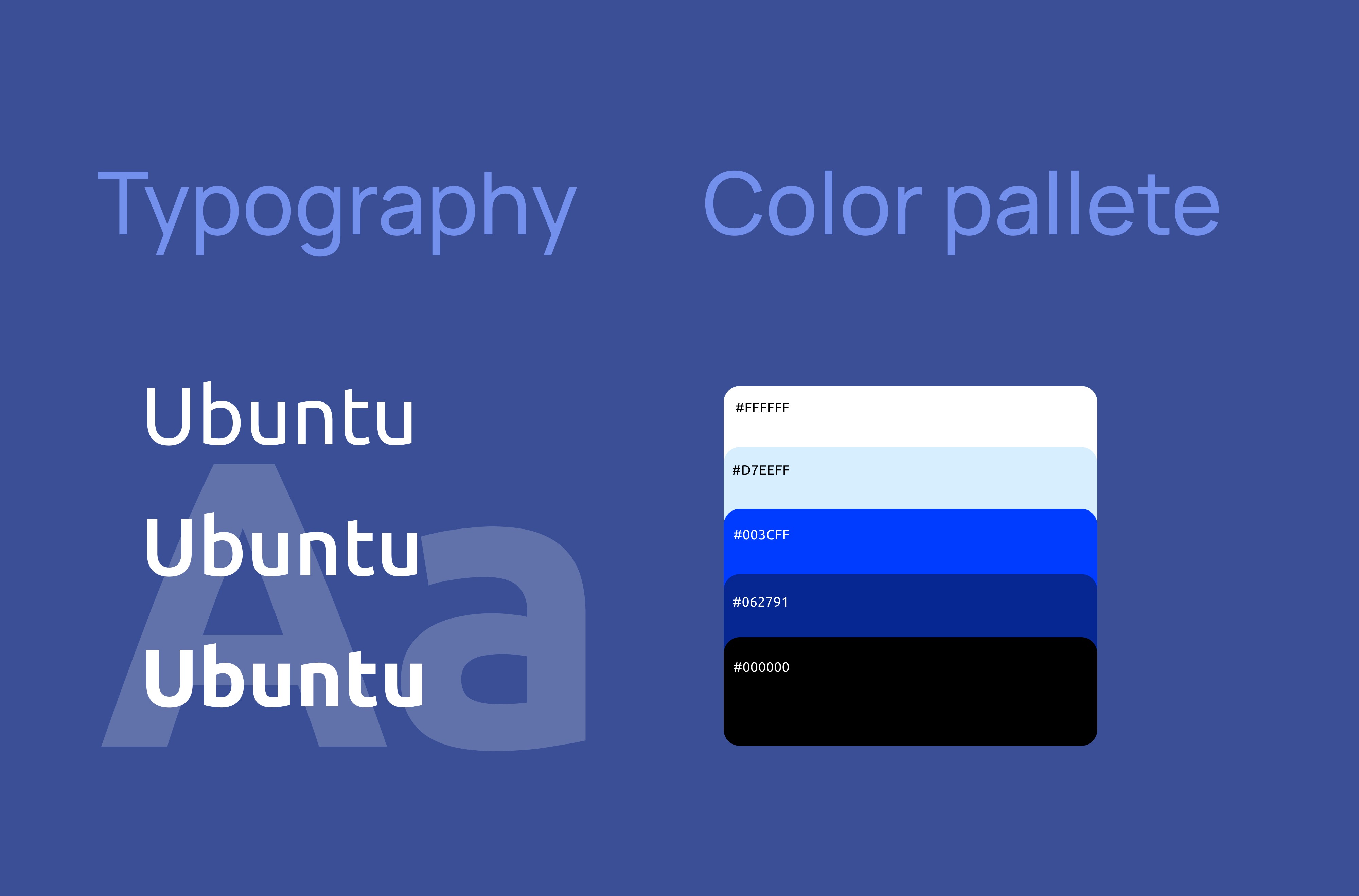
For Grofleet Digital, I chose a clean, white-first interface to support clarity in complex logistics operations. The layout prioritizes readability and quick scanning, which is essential for drivers, operators, and managers working under time pressure.
The primary blue color represents trust, reliability, and operational confidence, aligning with the logistics domain where accuracy and dependability are critical. Subtle secondary shades and neutral tones help separate information layers without overwhelming users. Consistent typography, clear visual hierarchy, and spacious layouts ensure the platform feels structured, predictable, and easy to navigate across both mobile and desktop experiences.
For Grofleet Digital, I chose a clean, white-first interface to support clarity in complex logistics operations. The layout prioritizes readability and quick scanning, which is essential for drivers, operators, and managers working under time pressure.
The primary blue color represents trust, reliability, and operational confidence, aligning with the logistics domain where accuracy and dependability are critical. Subtle secondary shades and neutral tones help separate information layers without overwhelming users. Consistent typography, clear visual hierarchy, and spacious layouts ensure the platform feels structured, predictable, and easy to navigate across both mobile and desktop experiences.
For Grofleet Digital, I chose a clean, white-first interface to support clarity in complex logistics operations. The layout prioritizes readability and quick scanning, which is essential for drivers, operators, and managers working under time pressure.
The primary blue color represents trust, reliability, and operational confidence, aligning with the logistics domain where accuracy and dependability are critical. Subtle secondary shades and neutral tones help separate information layers without overwhelming users. Consistent typography, clear visual hierarchy, and spacious layouts ensure the platform feels structured, predictable, and easy to navigate across both mobile and desktop experiences.
Impact
Impact
Impact
While there were no formal metrics available, the design outcomes focused on:
Improved clarity and usability
Reduced confusion in tracking and load management
Better operational visibility for all user roles
A more structured and scalable product experience
The platform moved closer to a user-friendly logistics solution that supports daily operations effective
While there were no formal metrics available, the design outcomes focused on:
Improved clarity and usability
Reduced confusion in tracking and load management
Better operational visibility for all user roles
A more structured and scalable product experience
The platform moved closer to a user-friendly logistics solution that supports daily operations effective
While there were no formal metrics available, the design outcomes focused on:
Improved clarity and usability
Reduced confusion in tracking and load management
Better operational visibility for all user roles
A more structured and scalable product experience
The platform moved closer to a user-friendly logistics solution that supports daily operations effective
Learnings
Learnings
Learnings
Designing for multiple user roles requires clear prioritization
Consistency across platforms builds trust and usability
Simplicity is critical in operational tools
Collaboration with product and engineering teams strengthens design decisions
Designing for multiple user roles requires clear prioritization
Consistency across platforms builds trust and usability
Simplicity is critical in operational tools
Collaboration with product and engineering teams strengthens design decisions
Designing for multiple user roles requires clear prioritization
Consistency across platforms builds trust and usability
Simplicity is critical in operational tools
Collaboration with product and engineering teams strengthens design decisions